New York City
October 10, 2026
New York never really slows down. It’s an island grid of constant motion, where the bodega is always open and everyone has a stronger opinion about the best route, the best slice, and the best way to get things done. From Astoria to Park Slope, and from Jersey City to New Haven to Philly, this is a place that pulls in innovators, adventurers, and builders who are ready for the pace, the friction, and the possibility. Come for the energy, stay for the late nights, the park-bench debates, and the constant sense that something is being made right now.
XO Ruby is a single-day, single-track conference designed to draw folks in from the city and the region. An approachable $100 ticket price coupled with no need for a hotel or airfare means you can connect with your community without breaking the bank.
Chime
Chime (Nasdaq: CHYM) is a financial technology company founded on the premise that core banking services should be helpful, easy, and free. We offer a broad range of low-cost banking and payments products that address the most critical financial needs of everyday people.





Registration
Welcome
Fish Bowl
Bring a question that you want to ask this room. We'll break into small groups and dot vote each question and discuss together.
Break
The Man Who Built a Brain
Computer programming comes from a dream and a war. The dream is the notion that a machine can think. The war is an intellectual clash between two rival factions. It lasted for over 60 years, and it shaped today's computing.
The first faction, the "symbolists", gave us modern programming languages, Ruby included. The other faction, the "connectionists", were disgraced for decades, only to come back with a vengeance in recent years.
The story of those two factions involved a lot of geeky inventions, technical challenges, and good old-fashioned human flaws. It's an amazing story that every programmer should know. Let me tell it, with some juicy technical details.

Paolo Perrotta
Human Out of the Loop
How I Built a Software Factory to Automate Research, Building, and Deployment
What happens when you stop prompting an AI to write code and build the assembly line around it instead? I built a software factory: a desktop app that takes an idea, researches the market, scaffolds an app, verifies it, reviews it, and deploys it to production, with an agent doing the work at every stage.

Landon Gray
Lunch
Viewing The Controller
LLMs can virtually understand logic, but how is this achieved using just tokens? If we know some of the techniques they use, we can give them a head start. But should we still be picking languages, libraries, conventions and names like before? And, are we even building the right things?

Mike Schwab
Elastic Software
Calculating tech debt using LLM tokens
Engineers complain about tech debt all day. We're bad at saying what it is and worse at pricing it, which is why product managers roll their eyes. Michael's answer is to count it in LLM tokens. A little napkin math puts a cost on both fixing the debt, carrying it, and point estimates go away.
Thinking in "tokenomic cost" changes how you design software, not only how you talk about debt. It leads to a new design pattern, Elastic Software.
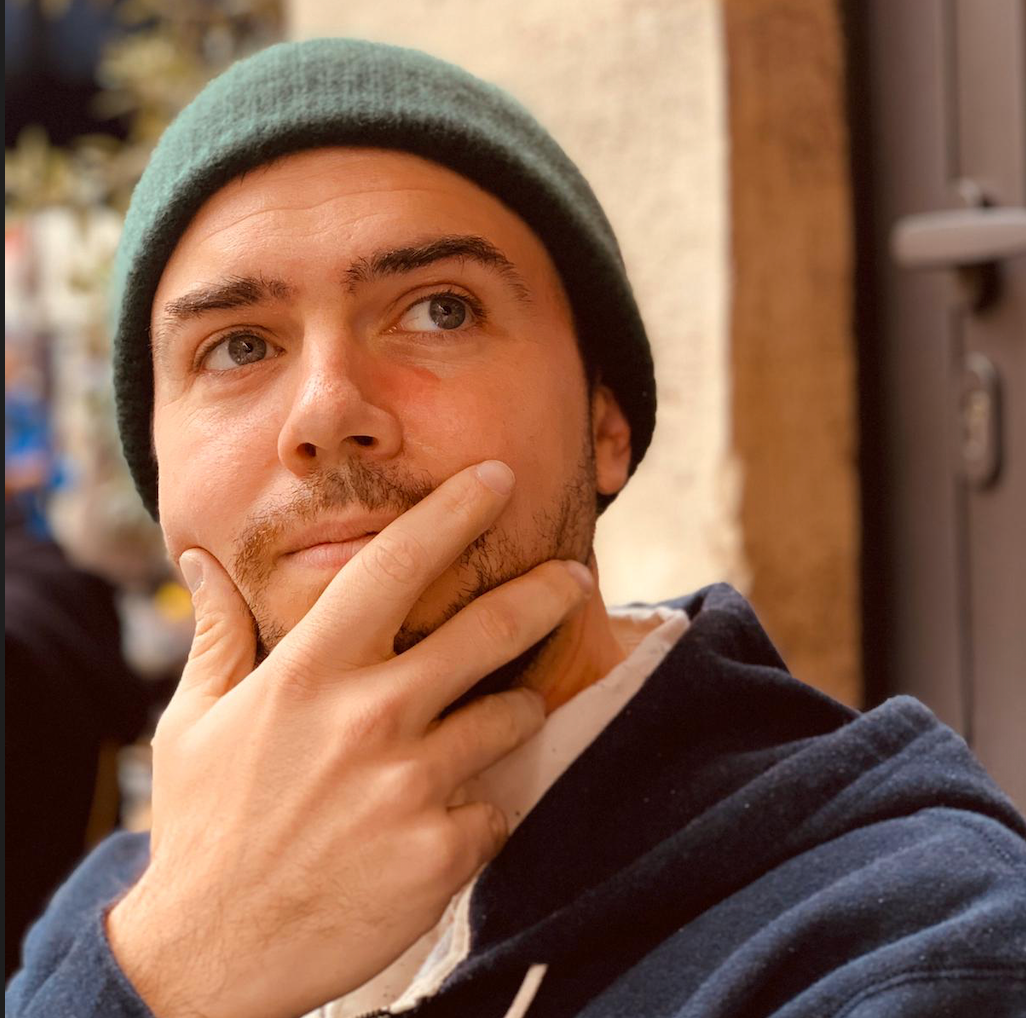
Michael Carroll
Break
Regex as Easy as /(abc)?/
What really happens when Ruby sees a regular expression like /abc/? While many of us use regular expressions regularly, we don't necessarily think much about how they really work. In this talk we'll trace a regular expression through Ruby's internals, from parsing the pattern into a syntax tree, to compiling into bytecode, to executing that bytecode on a small virtual machine. You'll come away with a deeper understanding and appreciation for Ruby's regular expression engine, and hopefully an increased confidence in working with regular expressions in Ruby.

Daniel Colson
Expand Your Ruby World with JRuby
JRuby is a Ruby 4.0-compatible runtime based on the Java Virtual Machine, bringing the scalability, performance, and ecosystem of the JVM to Rubyists around the world. Deploy anywhere with confidence and all-in-one packaging that protects your intellectual property. Scale to huge datasets and thousands of concurrent users with a single process. Take advantage of 30 years of tools and libraries from the Java world. JRuby opens up a world of opportunities to Ruby!

Charles Nutter
Break
Rubyist in the Loop
At a recent conference, nearly every hand in the room went up when asked who writes code with an AI agent. A day later, nearly every hand went up again when asked who identifies as a Rubyist. Both are true, which raises a question: if the agent types the code, what does it mean to be a Rubyist. This talk argues that engineering and taste are the answer, exploring why teams might fail to turn LLM coding speed into end-to-end productivity, and suggesting that human context and expertise can be the answer. You'll leave with tools for being an effecitve Rubyist in the loop.

Noel Rappin
Closing
Charles Nutter
Charles Oliver Nutter has co-lead the JRuby project for 20 years, bringing the scalability, performance, and ecosystem of the JVM to the Ruby world. Charles just want to see Ruby thrive and grow, and through JRuby works to expand opportunities for Rubyists around the world.
Daniel Colson
Daniel Colson is a software engineer at GitHub and a maintainer of Factory Bot. He got to code by way of a music career, and he still likes things that are well composed. He has spent years deep in Rails and Active Record, and he cares most about database performance, transactions, concurrency, and data integrity. He's spoken at RailsConf, RubyConf, Helvetic Ruby, Blue Ridge Ruby, and RBQ Conf. Ask him about regular expressions, or about what a hungry transaction does to your database.
Landon Gray
Landon Gray is Director of AI at DealMaker, where he runs DealMaker Labs, the company's initiative for turning AI from experimentation into shipped, measurable impact across the business. He has over a decade of software engineering experience, spending years working at software agencies before teaching himself AI-assisted development and enrolling in a post-graduate program at UT Austin, where he learned ML model training.
He's most known for a RailsConf talk on using Ruby to train an ML model, along with several talks on AI search pipelines (RAG) for Q&A.
Landon loves coaching, mentoring, and building. In his spare time he plays Magic: The Gathering, cooks, and spends time with his partner and family in upstate NY.
Michael Carroll
Michael Carroll is the founder of Coolhand Labs, which removes the drudge work of maintaining your AI agents — so your team can focus on building. Previously VP Engineering at Teladoc Health, and founder of RubiconMD, acquired by Oak Street Health in 2021.
Mike Schwab
Mike Schwab took part in Ruby’s invasion of NYC in 2007, and held onto the mirth of that era as the ecology matured. While not fully expert at engineering, he prioritizes ‘knowing what is possible’ with both code and science.
Mike worked with many start-ups and consultancies, then maintained Know Your Meme until 2020. Afterwards, he raised a computer-literate child.
Noel Rappin
Noel Rappin is a software engineer at Chime Financial and the author of Programming Ruby 4.0, the sixth edition of the Pragmatic Programmers' guide to the language. He writes the Dynamic Rubyist newsletter and has spent years writing about Ruby, testing, and the tools that make dynamic languages work in production.
Paolo Perrotta
Paolo Perrotta is the author of "Metaprogramming Ruby" and "Programming Machine Learning". He has over thirty years of experience as a developer, ranging from embedded to enterprise software, computer games, and web applications. He lives in Bologna, Italy.
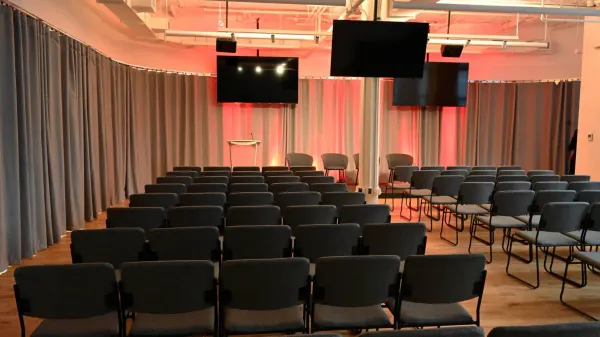
Metropolitan Pavilion, Dream Room
115 W 18th St, New York, NY 10011
Venue
Chelsea doesn't announce itself: it quietly holds some of the best galleries in the city, the rooftop gardens strung along the High Line, and enough exposed brick to remind you SoHo isn't the only neighborhood with taste. The Dream Room sits inside Metropolitan Creative Studios, a newly built floor atop the Metropolitan Pavilion — a longtime fixture for fashion shows and product launches, and now, for a day, us. Theater seating for up to 110, a stage, four mics, three screens. Nothing to plug in, nothing to fuss over. Just walk in and start talking.
Transportation
Leave the car. Chelsea and the Flatiron District sit at the crossing point of half the subway system. The 1 train stops at 18th St, a block from the door, and the 2/3, A/C/E, F/M/L, and 4/5/6/N/Q/R/W all land within a few blocks at 14th St. Wherever you're staying, you're one ride and a short walk away. If you do drive, parking garages line 18th, 19th, and 20th Streets.
Nearby
- Chelsea Market, five minutes west, for a bite before doors open
- The High Line, a walk-up entrance a few blocks over on 14th St
- The Flatiron Building and Madison Square Park, a short walk northeast
- Union Square, a few blocks south if you want the bigger crowd